
Choosing the Right Steel Reel for Wire Drawing Lines
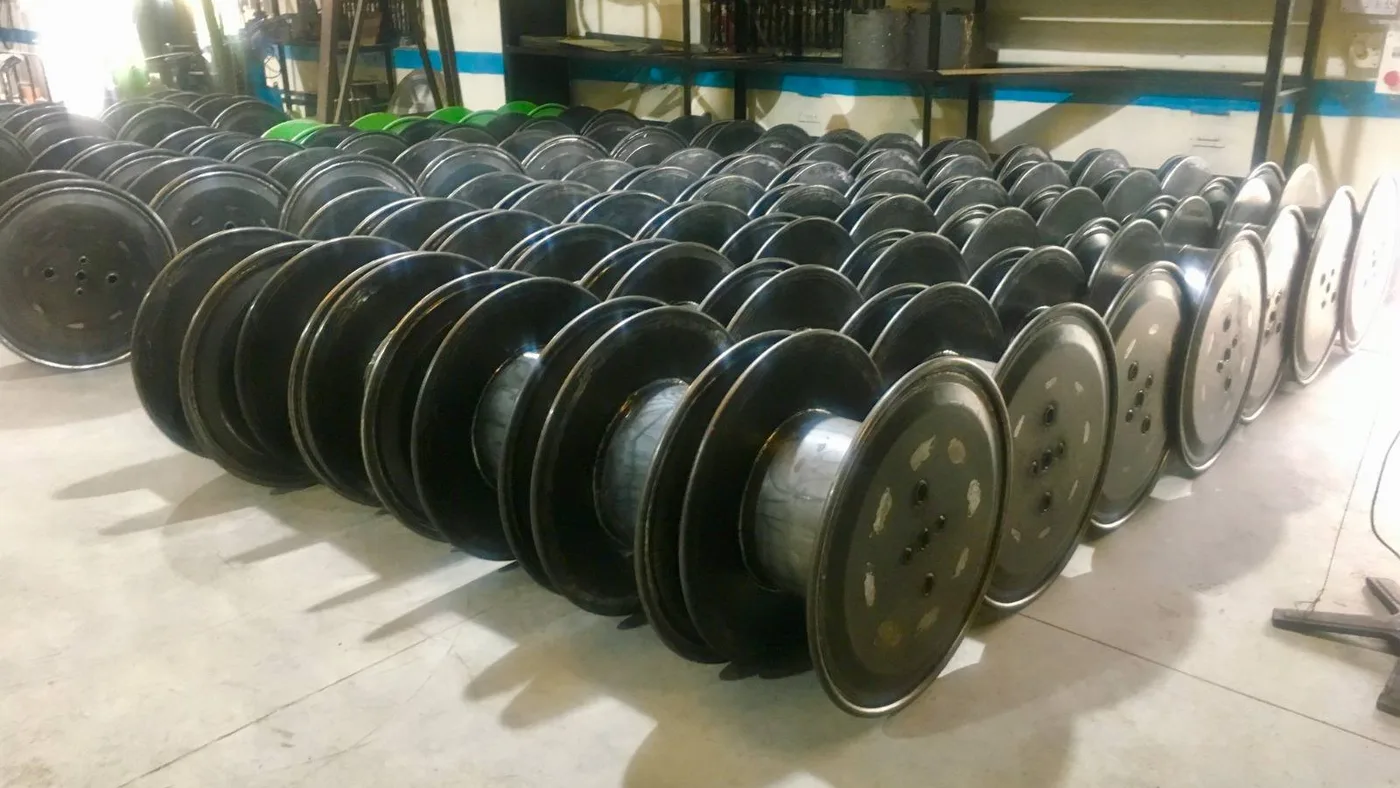
Flange diameter, bore, balance and duty cycle decide whether a reel helps your line — or slows it down.
Wire drawing and stranding lines put continuous demand on pay-off and take-up spools. The wrong flange size, soft geometry or poorly finished winding face shows up quickly as vibration, uneven lay or premature flange damage.
Start with process data: line speed, package weight, wire type and whether the reel must survive annealing. High-speed enamelled or capillary wire usually needs a machined reel with tight drum and flange control. Heavier metallic packages often favour reinforced or heavy-duty builds with stronger rims and weld integrity.
Match the bore and hub to the machine OEM interface. A correct flange diameter without the right bore still creates handling risk on the shop floor. Share traverse and lift points early so Venus can engineer strap slots, lift holes or stiffened drums where needed.
Finally, decide finish for the environment — powder coat, zinc systems or industrial paint — so corrosion and handling marks do not cut reel life short. A short engineering conversation around coil data almost always beats copying a catalogue size alone.
Need a reel sized for your line?
Share flange, bore or a drawing — Venus will propose the right build.